
Selecting Emergency Showers, Supplementary Wash Stations, and Decontamination Solutions
Working with hazardous materials puts your team at risk of harm to their bodies and eyes. Emergency and decontamination equipment is essential to mitigate injuries.
This equipment includes drench wash showers, eyewash stations, combination units and decontamination solutions. You need to select the appropriate apparatus for your application to ensure protection.
Delta Health and Safety takes you through the various options and how to choose the right one for your environment.
Risk Management Assessment
Carrying out a risk management assessment helps you pick the right emergency and decontamination equipment. Here are the steps you need to take.
1 – Identify
The first step is to figure out what chemicals and hazardous materials you have on site.
Explore your site and take note of the substances and chemicals in use and where they are situated.
Once you have this list, consider how they could injure staff. Other ways to determine the materials present are to:
- Talk to workers
- Read SDSs
- Look back at the incident and sick leave reports
2 – Assess
After identifying the substances you are dealing with, you need to assess how hazardous they are.
Some critical questions to ask are:
- Are the chemicals corrosive?
- How are these materials being used?
- What is the risk of staff facing chemical splash?
- How often are these substances used?
- Could a chemical spill or splash be life-threatening to your staff?
3 – Protect
Identifying and assessing the risks associated with hazardous substances on-site gives you critical information.
Firstly, it’s vital that you provide your team with the appropriate personal protective equipment.
In the event that the PPE has been compromised it is just as important to have additional measurements in place.
Step 1 and 2 will allow you to pick the correct emergency and decontamination equipment for your application, chemical exposure, and budget.
Picking Emergency and Decontamination Equipment for your Application
After completing your full risk management assessment, you are in a good position to select equipment. However, there are several other elements to consider.
The Number of Workers in the Vicinity
The amount of staff dealing with hazardous substances will determine how many showers or wash stations you need.
The Necessity for Alert Methods
Certain situations require audible and visual alarms. An alert method linked to emergency and decontamination equipment helps when staff are isolated. These will draw attention so that other staff can assist in the occurrence of contamination.
Flushing Fluid Hygiene
You need to assess how often you can flush and clean certain systems. Self-contained systems require changing out fluid to avoid contamination. If the fluid sits for too long, it runs the risk of bacteria build up. This could react with the chemicals it is designed to flush out or exacerbate the wound.
It is also necessary to flush plumbed stations and showers. If not used for some time, the water may accumulate contaminants like rust and scale. However, this is easy to prevent with routine flushing. Whatever your choice, ensure you have a test program in place for checking your showers periodically.
The Need for Neutralising Solutions
Irrigating chemical exposure can help reduce injury healing time. This is particularly helpful with highly corrosive materials.
Neutralising solutions offer a first aid method to halt the penetration of ions into the tissue. They are more effective than water alone. However, they are more expensive, so budget considerations are essential.
Selecting Stations Constructed of the Right Materials for Your Chemical Exposure
It is important to ensure the appropriate functioning of your emergency and decontamination equipment. Drench showers and eyewash stations comprise several components. The materials used in the different parts may be susceptible to chemical corrosion.
Stainless Steel and PVC are durable and resistant to several chemicals. Powder coating materials can also improve component protection.
Emergency Showers and Supplementary Equipment
Drench showers and eye wash stations use water to flush workers’ exposed skin and eyes. Depending on the work area, exposure may be limited or greater, and each site would need different decontamination solutions.

Drench Shower
Drench showers have a high-pressure water flow. They flush workers’ heads and bodies. They are unsuitable for eye injuries as the water rate could cause further damage.
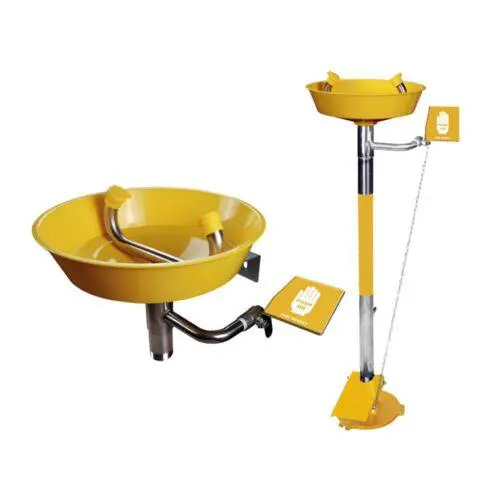
Eye Wash Stations
Eye wash stations provide safe flushing for the sensitive areas of the face and eyes. The water rate produces pressure that will not cause further damage. You may only require an eye wash station without a shower if the risk is limited to the face and eyes.

Combination Units
Combination units have both drench showers and eye wash stations. These are convenient as they reduce the amount of space required. They are suited to situations where information about hazardous materials is lacking or in complex environments.
Decontamination Solutions
When chemical burns occur, corrosive substances permeate tissue and destroy the cells. Once extensive tissue damage occurs, it can be irreversible.
Flushing the affected area with water cleans the hazardous material off the surface of the skin. Decontamination solutions do the same as water flushing but are more effective as they combat tissue penetration.
How To Keep Your Employees Safe from Chemical Injury
Emergency and decontamination equipment does not reduce staff exposure. It provides a first aid solution to mitigate injury while the employee seeks medical help.
Staff protection should first and foremost come down to administrative and preventative measures. Ensure your employees get ongoing training in how to handle hazardous substances correctly. When these measures are not enough to eliminate risk, implement decontamination measures.
Protect your workers from severe and permanent injury by ensuring you select the appropriate PPE and decontamination solution. Contact our team for assistance with the correct clothing and equipment for your application.