

Procuring and Maintaining Acid Resistant and Flame Retardant Garments
There are many considerations when procuring PPE and garments for your workplace. Being informed, selecting the correct garments, and following the proper care will increase longevity. Extended garment life also means reduced costs in the long term.
Flame and acid garments make up a small range within an extensive range of protective clothing. Different hazards will demand different garments. Sometimes a specialised garment is needed to protect the end-user. A flame-acid combination garment is not always the best solution especially with regards to chemical protection. There is no “one-size fits all” garment. Always make sure you are using the correct garment for the hazards: speak to a member of our sales team for more info. This article will take you through some points you need to consider about flame and acid garments.
Flame-Acid Combination Garments
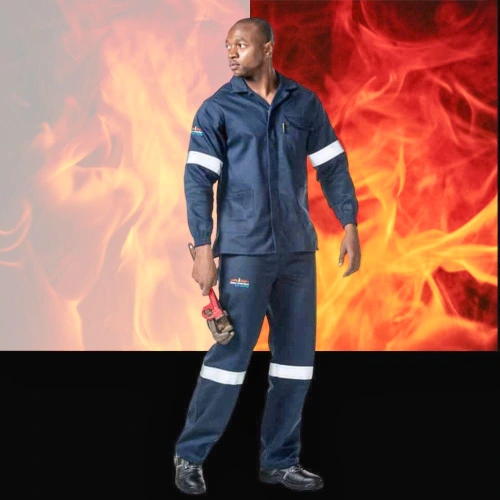
Flame-acid garments are available as suits, trousers, or jackets. They are in high demand in the petrochemical industry because they give protection against both flame and acid hazards.
The use of the flame-acid combination garment has spread and now, it is used across a wide range of industries nationwide. Some buyers have defaulted to buying an acid-flame combination garment, believing this is the easiest way to ensure that workers are protected. However there are a number of factors to consider.
How to Properly Select Flame and Acid Garments
To ensure the best use of your budget and an appropriate level of protection, Delta Health and Safety suggests purchasing a suit designed specifically for your environment.
Refer to the below table to help you in your selection:
Type |
Acid |
Flame |
Flame-and-Acid |
Finish |
The acid resist finish W4 is a water-resistant finish that doesn’t allow the cloth to be wetted by chemicals. | The flame retardant finish W7 is a chemical finish applied to 100% cotton fabrics. With the proper care this finish usually lasts up to 50 washes (unless it has been damaged by chemicals or heat). | Both the W4 and W7 finishes are applied to the same garment to provide a broader range of protection.
It is important to note that when one chemical finish is applied over another, the finish’s levels of protection can be less effective than before. It can also result in reduced longevity and a more expensive garment. |
When to Use |
Acid-resistant garments should be used when working with or around acids or other corrosive chemicals. Examples of situations where acid-resistant garments should be used include:
|
Flame retardant garments should be used whenever there is a risk of exposure to heat, flames, or sparks. These garments are designed to resist ignition, slow the spread of flames, and self-extinguish when the source of heat is removed. Examples of situations where flame retardant garments should be used include:
|
We only recommend an all-purpose flame and acid-resistant suit for workers exposed to environments that have both heat and chemical hazards simultaneously. Examples of situations where an all-purpose flame and acid resistant garment may be needed include:
|
It is important to remember that even when garments are compliant, they are not designed to be fool proof safety items. They are designed to be used as the last line of defence, providing you some time to remove yourself from a dangerous situation, should it occur.

Important Considerations When Selecting Garments Suited to Your Environment and Application
It is important that you select the appropriate garment for your work environment and application to ensure both compliance and financial prudence.
In the industry, a trend has emerged of using a single garment for all hazards, using flame-acid combination garments as a general coverall.
This is not always the most effective choice if you have different hazards in different areas of your plant or facility. For example, an employee working in a foundry will most likely not be exposed to both acid and flame hazards. They will be better protected with a single-finish flame garment.
Flame and acid garments are more expensive than flame-retardant or solely acid resistant garments. Acid coatings also reduce the longevity of the flame retardant coating.
When you choose a flame-acid garment, be sure that the end user works in an environment with risks of encountering both heat and chemicals. This will result in better levels of protection, and longevity while saving you money.
If you need help choosing the correct protective clothing for your team, contact Delta Health and Safety. Our team will guide you through the process by asking questions to help you make an informed decision.
Compliance Testing of Flame and Acid Finishes
There are various testing methods used to check the effectiveness of flame and acid resistant finishes. Not all manufacturers use the same process of testing. The following are the most common tests used.
Acid-resistant finish
The effectiveness of the W4 acid-resistant finish is usually tested using the German DIN test 4846. During this assessment, concentrated acids are applied directly to the fabric, and this is checked for any absorption within a fixed period. Hydrochloric and sulfuric acids are tested for three hours, while nitric acid is tested for one hour.
Flame retardant finish
The following are the two most common tests conducted to check the effectiveness of the flame retardant W7 finish::
- EN ISO 6940: This test measures the ability of the fabric to resist ignition when exposed to a small, defined flame.
- EN ISO 6941: This is a method of measuring flame spread times of vertically oriented textile fabrics when exposed to a small flame.
A simple test
There is a simple test that you can do to check if your garment is still resisting acid. Place a drop of water on the garment. If the drop immediately soaks into the garment, it will not resist acids and needs to be replaced.
How to Check If Your Flame and Acid Garments Are Compliant
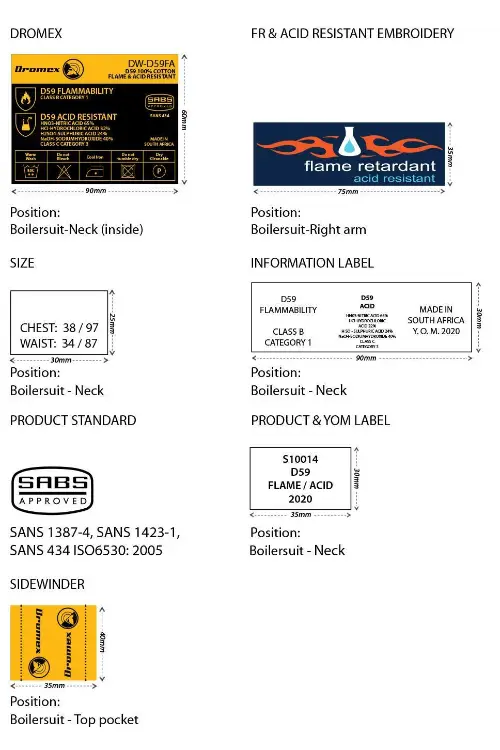
Garments that meet the required standards will be marked and labelled accordingly. See examples on the right.
In addition to (or if you can not find) the labels and markings, compliance of a garment can be checked with the manufacturer. Get in touch with the manufacturer to confirm exact standards and compliance.
The list of standards that are adhered to should be available on the manufacturer’s website. Reputable suppliers should always be able to provide you with a certificate of compliance on request.
The Cleaning and Maintenance of Flame and Acid Garments to Ensure Longevity
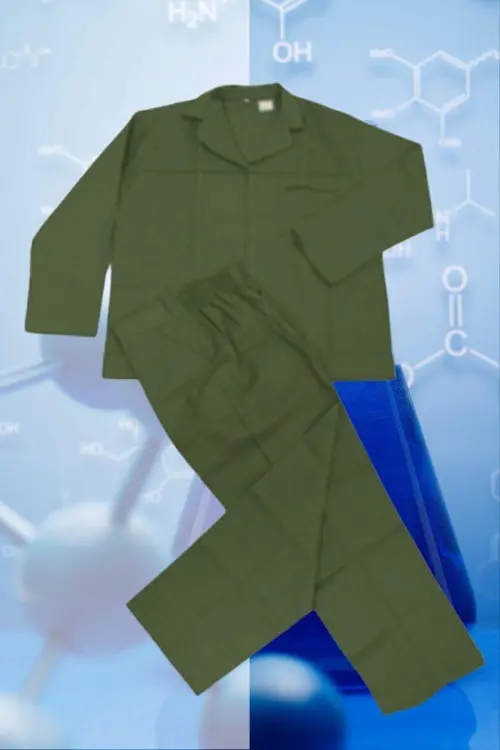
Companies often use their own laundry processes; others outsource the washing of garments to external companies. Whichever you choose, it is the employer’s responsibility to ensure that instructions on the garment label are followed.
If you wash the garments at home, ensure that they are not mixed with personal items to remove the risk of contamination. Pre-treat greasy stains and wash them at a temperature of between 40 and 60 degrees Celsius.
Do not use Hypochlorite Bleach or detergents containing it. Instead, thoroughly rinse and remove any wetting agents from your clothing, do not tumble dry, and avoid hanging your garments in direct sunlight.
Always check the washing instructions on the label of the garment.
How to Correctly Dispose of Flame and Acid Garments
Once your PPE has been exposed to chemicals, it’s safest to discard it. It’s not always possible to tell with the naked eye if the effectiveness of a garment has been reduced after it makes contact with acid.
If not disposed of properly, these items could become a fire hazard or contribute to groundwater contamination as they decay in landfills over time.
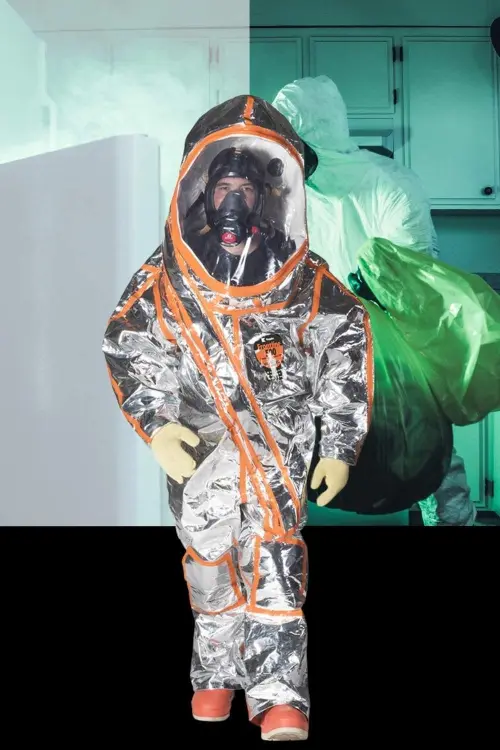
The specific method used will depend mainly on the type of contamination involved. For extremely dangerous substances, a hazmat team should take custody of the PPE and go through a process tailored to the exact substance.
Each situation will have different standards, so safety managers must keep up to date with the current standards.
Providing Protection Beyond PPE
Delta Health and Safety offers a wide selection of flame and acid resistant garments and other garments in various finishes. We distribute both international and local manufacturers, so you can be confident that we will meet your needs in terms of the balance between quality, availability and affordability.
We supply garments that meet all relevant standards. If you have questions, Delta Health and Safety is here to help you make an informed decision that’s best for your business and end-user.