
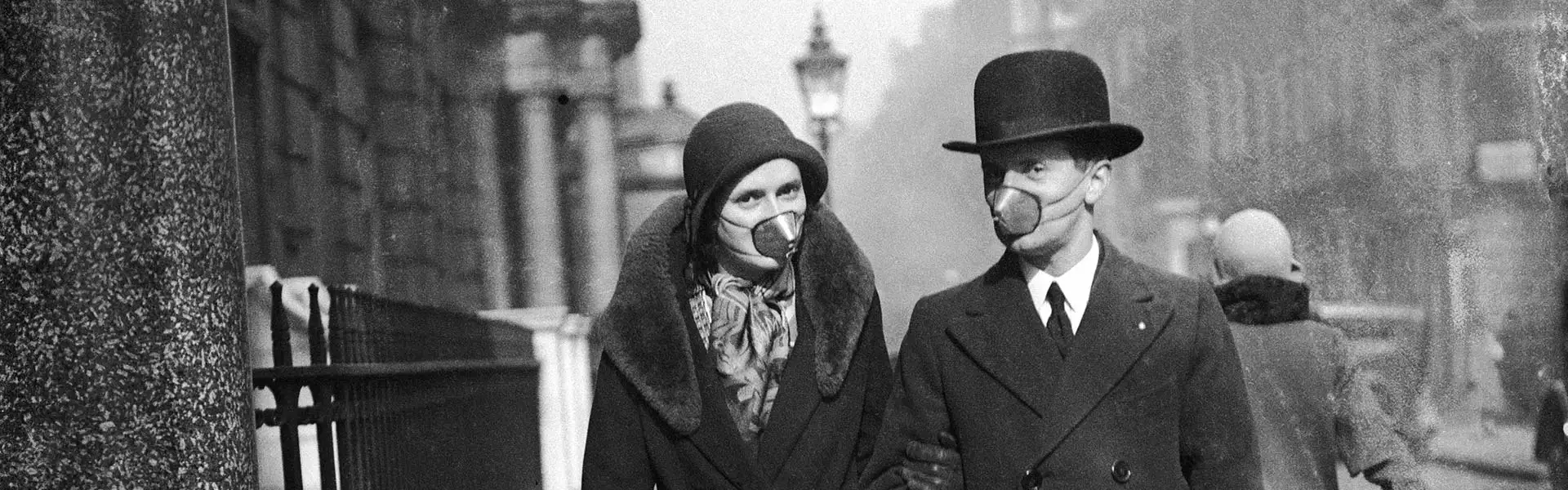
The History of Respiratory Protection
The Development of Respiratory Protective Equipment through the Ages (Part 2)
In this two-part blog, we take a closer look at the journey taken before our advanced RPE became the quality equipment it is today.
Part 1 looked at developments from ancient history through to the 19th century.
Now, in part two of the blog we put the spotlight on changes made through war and in recent events.

Image Source: https://www.marinechemist.com
War, Healthcare and Respiratory Protection
Both chemical warfare and pandemic diseases have led to significant developments in RPE.
World War Impact on RPE
World War One
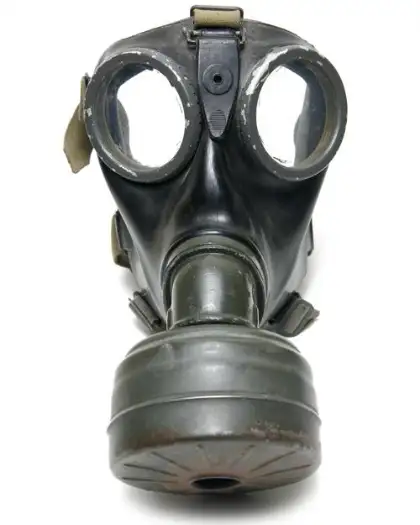
WWI brought new respiratory threats to the fore. Chemical warfare saw the use of chlorine, phosgene and mustard gas. Respiratory protection was not part of the standard military equipment issue.
In Canada, a resourceful soldier discovered a surprising and lifesaving solution. He noticed the ammonia in urine neutralised chlorine, and water dissolved it. As a result, the Reserve Canadian troops began using urine-soaked cloths as respiratory protection. As unpleasant as this may sound, it was a decision that saved their lives. Luckily respiratory protective equipment has progressed since then. Today products such as 3M’s 6800 full-face reusable respirators can fit different filters to protect from gases, vapours and particulates.
World War Two
Thankfully military-issued equipment included respirators by World War II. American regulations, developed in WWII, established specific requirements for respiratory equipment.
Respiratory protective equipment had to:
- Give adequate protection
- Be reasonably comfortable and physically convenient to wear
- Provide an acceptable period of protection
- Comprise durable materials
These form the basis of industrial respiratory protection regulations today.
Respiratory Protection in Healthcare
The Early Use of Cloth Masks
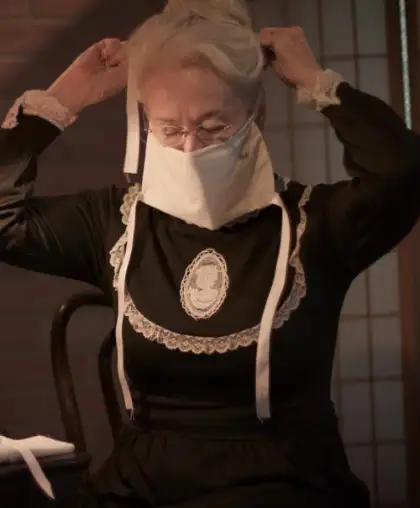
In the Victorian era, respirators were made of silk, leather and layers of wire mesh. They were impractical and uncomfortable. The emergence of the germ theory in the 19th century disproved their usefulness, and they then fell out of use. Instead, the use of cloth masks proved effective in reducing the spread of infection. After these developments, the use of cloth masks by healthcare workers became the norm.
Records show that the Chinese used cloth masks as early as 1911, during the Third Plague pandemic in China. A cloth covering proved helpful in the prevention of the spread of the pneumonic plague through coughs.
In 1918 the wide use of cloth masks was also seen during the Spanish Flu breakout. At this time, the deployment of WWI soldiers to various parts of the world eventually resulted in a pandemic. From this, it became apparent that healthcare workers needed respiratory protection to care for the sick.
Modern Developments in Respiratory Protection
More Recent Health Risks
In the 1990s, an outbreak of tuberculosis in the U.S. highlighted the importance of respiratory protection. The U.S. Centre for Disease Control (CDC) released guidelines for the use of respiratory equipment. Among other things, they emphasised that proper use and implementation of a PPE training programme are essential.
Many viruses have impacted the world in recent years. From 2014 to 2016, the global epidemic of the Ebola virus again brought the essential nature of healthcare PPE to the fore. Ebola can spread by several means, one of which is through saliva. If both patient and healthcare practitioner are wearing protective masks, the risk of exposure to saliva is reduced.

Terrorist Attacks in America
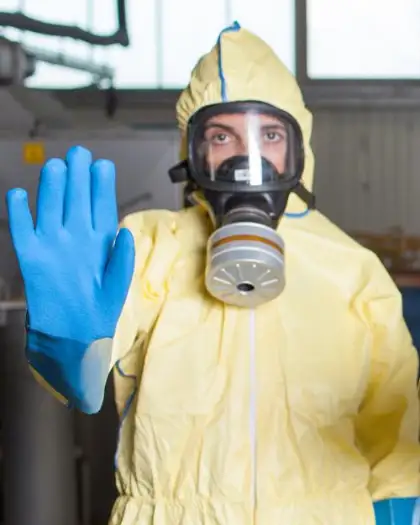
The early 2000s and the September 11 terrorist attacks prompted another resurgence in protective respiratory equipment development. It became apparent that the RPE used by first responders (mainly consisting of disposable dust masks) were inadequate. These disposable masks did not prevent the inhalation of the fine dust at ground zero because the first responders were not adequately trained in the use of respiratory protection. Sadly, many suffered lung disease later from the damage caused by the dust.
Developmental work began on improving breathing apparatus and policies for its use. The full-facepiece, air-purifying respirator arose out of this. The necessity for first responders to be appropriately trained in the use of PPE also became apparent. Continued training in using respiratory protective equipment and other PPE is now a requirement in hazardous environments.
The events of two world wars, the aftermath of September 11 and various pandemics led to highly effective results. One such result is products like the 3M 8833 maintenance-free disposable valved respirator which protects from fine dust, water and oil-based mists.
Our Current Pandemic
Currently, the COVID-19 virus spurs on the development of reusable and disposable respiratory protective equipment.
A collection of various faculties at the University of Southhampton designed and made a prototype of the PeRSo. This personal respirator provides the wearer with filtered air. Widespread production of air filters such as these could improve healthcare delivery.
The design of the PeRSo has been published open to manufacturers around the world. The NHS in the United Kingdom has approved production. A version modified for the developing world has also been created to make the product more accessible. Access to innovative respiratory products such as the PeRSo could save many lives around the world.
We have the research and creations over many centuries to thank for being well equipped to protect ourselves. Delta Health and Safety stock disposable face masks for healthcare and daily protection.
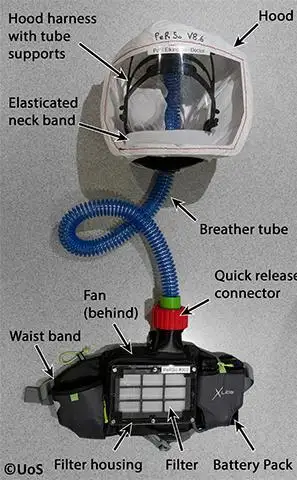
Image Source: https://www.southampton.ac.uk
Respiratory Protective Equipment (RPE) – It’s Essential
The necessity of respiratory protective equipment (RPE) is present in almost every industry. From construction to healthcare, respiratory PPE has come a long way from the Roman animal bladder skin. Protecting yourself and your staff from harmful airborne particles prevents present and future health problems.